

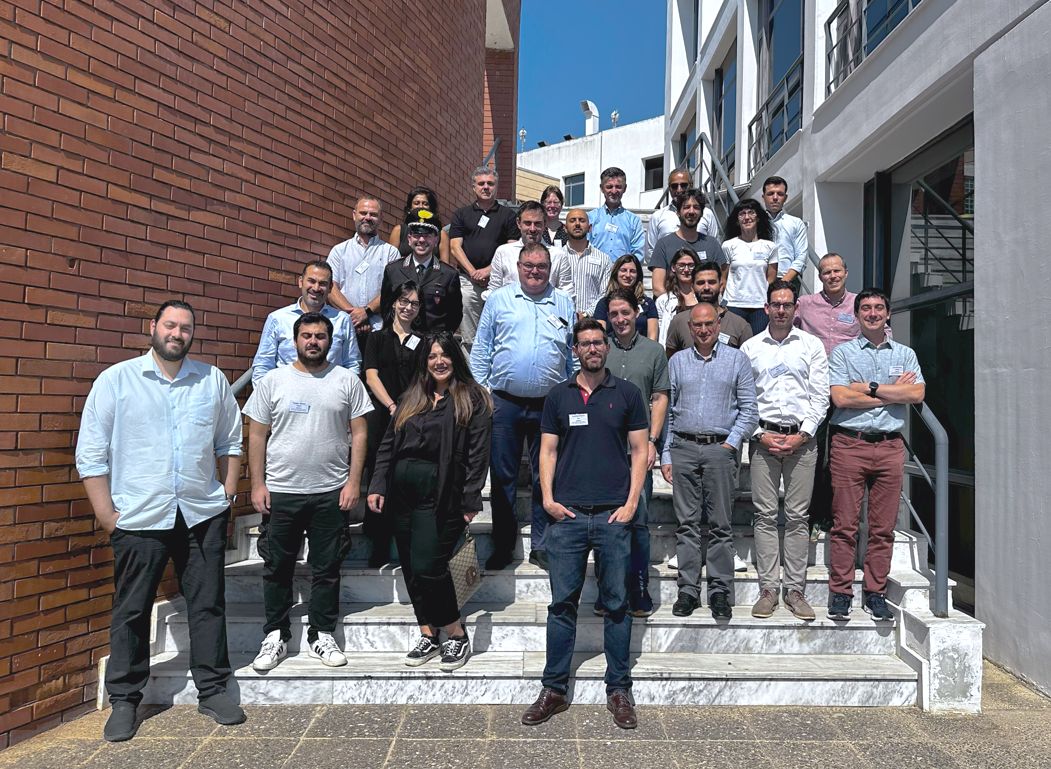
During the project’s kick-off meeting on 9–10 September in Thessaloniki, hosted by the Centre for Research & Technology Hellas (CERTH), the project coordinator, the fourteen consortium partners aligned on the initial implementation plan and established the roadmap for this ambitious initiative.
Next Steps
The next step was presenting the project to the European Commission at the Meeting of the Expert Group on Artificial Intelligence in the Domain of Home Affairs on 5 November. The discussion highlighted how DETECTOR would deliver forensically robust detection of deepfakes and synthetic media, ensuring that technological innovation was developed in line with regulatory, legal, and ethical standards.
Meeting’s Schedule
As Antonia Koumpoti, the project’s Deputy Coordinator, noted:
“We wanted not only to ensure that our technology was going beyond the state of the art — we wanted to demonstrate that such technology could be developed in a regulated environment with full compliance.”
In the following months, the consortium focused on advanced detection pipelines for manipulated image, audio, video, and text; validated forensic datasets and benchmarking methodologies; and frameworks that enhance evidentiary trust and transparency.
More updates were planned as implementation progressed, and the consortium looked forward to continued collaboration across the research, forensic, and policy communities.